
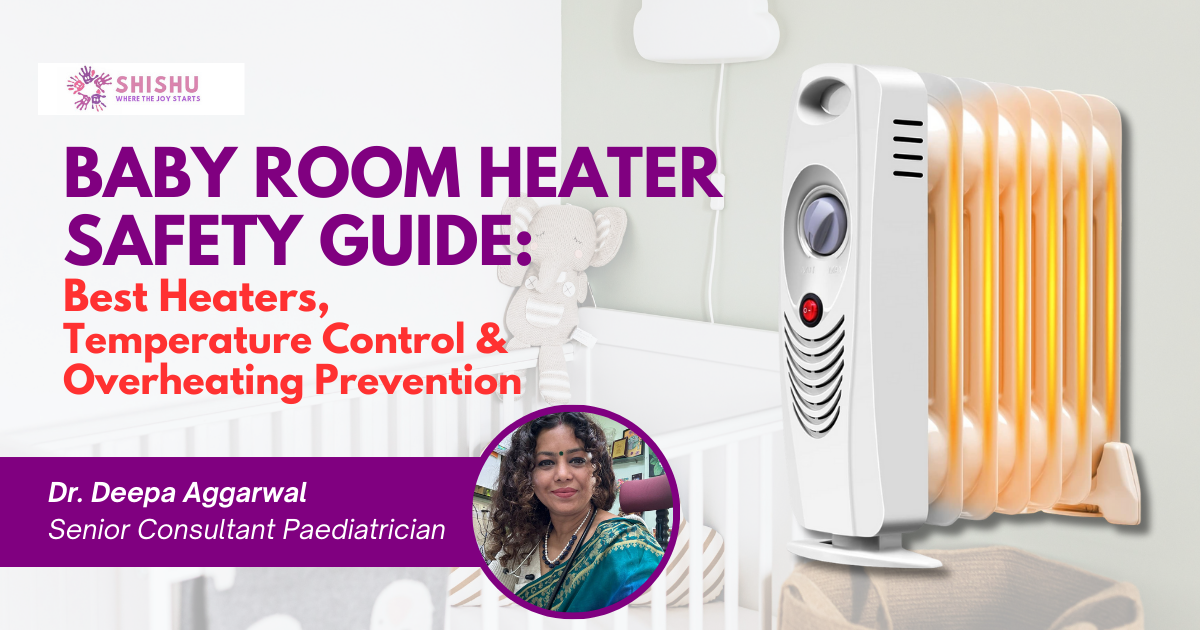
Safe Heater Use in Winter: A Complete Guide for Parents (Pediatrician-Approved)
How to choose, install and use room heaters safely for babies?
Winter brings a common concern to every parent’s mind- “Can I use a heater in my baby’s room? Which heater is safe? How do I prevent overheating?”
This comprehensive guide outlines everything you must do before buying a heater, during use, and after use to keep your baby warm without compromising safety.
✔ BEFORE BUYING / INSTALLING A HEATER (FIRST USE CHECKLIST)
1. Choose the right type of heater
-
Ensure the heater is electric, not fuel- or gas-based.
❌ Avoid kerosene, coal, open-flame or combustion heaters.
✅ Oil-filled radiators are the safest and best for prolonged use.
2. Look for child-safe features
Choose a heater that includes:
-
Overheat protection
-
Tip-over automatic shutdown
-
Cool-to-touch exterior or a protective guard
These features drastically lower the risk of burns or fire hazards.
3. Match the heater to the room size
-
Nurseries and small bedrooms do not need high-wattage heaters.
-
An overpowered heater can overheat the room quickly, making the baby uncomfortable and increasing dehydration risks.
4. Plan safe placement
Place the heater:
-
On a flat, stable floor
-
Away from bedding, curtains, furniture, toys, or anything flammable
-
Maintain a minimum 1 metre (3 ft) safety zone around the heater
5. Ensure basic ventilation
Do not completely seal the room.
Allow brief, periodic fresh air exchange to maintain oxygen flow and humidity.
🛡 DURING USE (WHEN THE HEATER IS ON AND BABY IS IN / NEAR THE ROOM)
1. Never leave your baby unattended
A heater should never run in a room where the baby is alone.
2. Avoid direct heat exposure
Do not aim heat directly at:
-
Baby’s cot
-
Crib
-
Sleeping area
Warm air must circulate gently, not forcefully.
3. Maintain safe temperature
Use a room thermometer and keep the room between:
➡ Recommended: 23–25°C
Anything above this can cause overheating and dehydration.
4. Monitor for overheating signs
Watch for:
-
Sweaty skin
-
Flushed cheeks
-
Rapid breathing
-
Irritability or discomfort
If you notice these reduce heat or turn the heater off.
5. Protect humidity levels
Heaters dry the air, which can irritate:
-
Baby’s skin
-
Nose
-
Throat
Use:
-
A humidifier, OR
-
A bowl of clean water placed safely in a corner
6. Ensure electrical safety
-
Plug heater directly into a wall socket
(❌ Avoid extension cords — fire risk) -
Check wires and plugs regularly
-
Keep all cords out of baby’s reach
💤 AFTER USE / GENERAL SAFE PRACTICES
1. Turn the heater off when baby sleeps
Especially overnight continuous heating increases:
-
Overheating risk
-
Fire hazard
-
Excess dryness
-
Poor air quality
2. Regular cleaning & inspection
Dust buildup can reduce performance and increase fire risk.
Check:
-
Heater fins
-
Plug
-
Cord
-
Switches
3. Maintain good air quality
Ventilate the room periodically to replenish oxygen and maintain humidity.
4. Dress your baby appropriately
If the heater is on:
-
Avoid over-layering
-
If baby becomes red, sweaty, or restless — remove a layer
When the heater is off, adjust clothing accordingly to maintain comfort.
Final Thoughts
Using a heater in winter is safe for babies when done correctly.
Choosing the right device, placing it safely, monitoring room temperature, and maintaining humidity ensures a warm and healthy environment without compromising safety.
Your baby’s comfort, sleep and well-being depend on the right balance of warmth + safety + ventilation.