
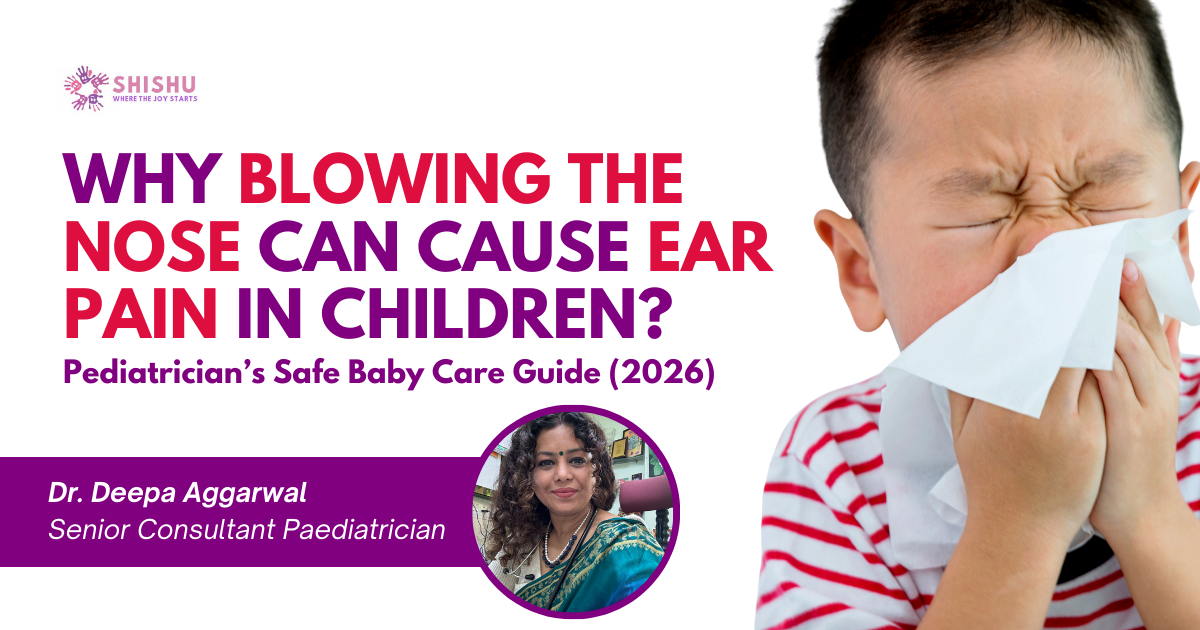
Why Does the Ear Hurt When Children Blow Their Nose? A Pediatrician Explains
Parents often encourage children to blow their nose forcefully during cough and cold, believing it will “clear all the mucus.” However, many children complain of ear pain after blowing their nose, which worries parents.
As a pediatrician, this is a very common concern I see during cold, flu, and allergy seasons. Understanding how the nose, sinuses, and ears are connected helps parents manage blocked noses safely and reduce the risk of ear infections.
What Happens Inside the Nose During a Cold?
When a child has a cough, cold, or upper respiratory infection, the lining of the nose (mucous membrane) becomes swollen and inflamed. This swelling causes:
-
Excess mucus production
-
Nasal blockage
-
Pressure buildup inside the nasal passages
At this stage, the nose is already sensitive.
Why Blowing the Nose Hard Can Cause Ear Pain
1. Pressure Pushes Mucus the Wrong Way
Forcefully blowing the nose increases pressure inside the nasal cavity. Instead of mucus coming out, this pressure can push mucus upward into the sinuses, leading to:
-
Facial pressure
-
Sinus discomfort
-
Thick, infected mucus formation
2. The Ear–Nose Connection (Eustachian Tube)
The Eustachian tube is a small passage that connects the middle ear to the back of the nose. Its job is to:
-
Equalize ear pressure
-
Drain fluid from the ear
When a child blows the nose too hard, mucus and pressure can travel through this tube into the middle ear. This can cause:
-
Ear pain
-
Ear fullness or popping sensation
-
Increased risk of ear infections (otitis media)
This is why children often say their ears hurt after blowing their nose forcefully.
Should Children Blow or Sniff During a Cold?
Neither loud blowing nor forceful sniffing is recommended.
❌ What to Avoid
-
Blowing both nostrils together forcefully
-
Loud sniffing that pulls mucus back
-
Repeated aggressive nose clearing
These actions increase pressure and worsen discomfort.
The Correct Way to Blow the Nose (For Kids and Adults)
✔️ Teach children to:
-
Close one nostril at a time
-
Blow slowly and gently
-
Use a soft tissue or handkerchief
✔️ If sniffing is needed:
-
Sniff very gently
-
Avoid pulling mucus forcefully backward
Gentle techniques protect the ears and sinuses while still helping clear nasal passages.
How Parents Can Help During Cough and Cold
To ease nasal blockage safely:
-
Keep the child well hydrated
-
Use saline nasal drops or sprays (if advised by your doctor)
-
Encourage rest
-
Maintain humidity in the room
If your child has persistent ear pain, fever, hearing difficulty, or repeated ear infections, consult a pediatrician.
Key Takeaway for Parents
During a cold, force is the enemy.
Gentle nose care helps:
-
Reduce ear pain
-
Prevent sinus congestion
-
Lower the risk of ear infections
Teaching children the right way to blow their nose is a small step that protects their ears and overall respiratory health.