
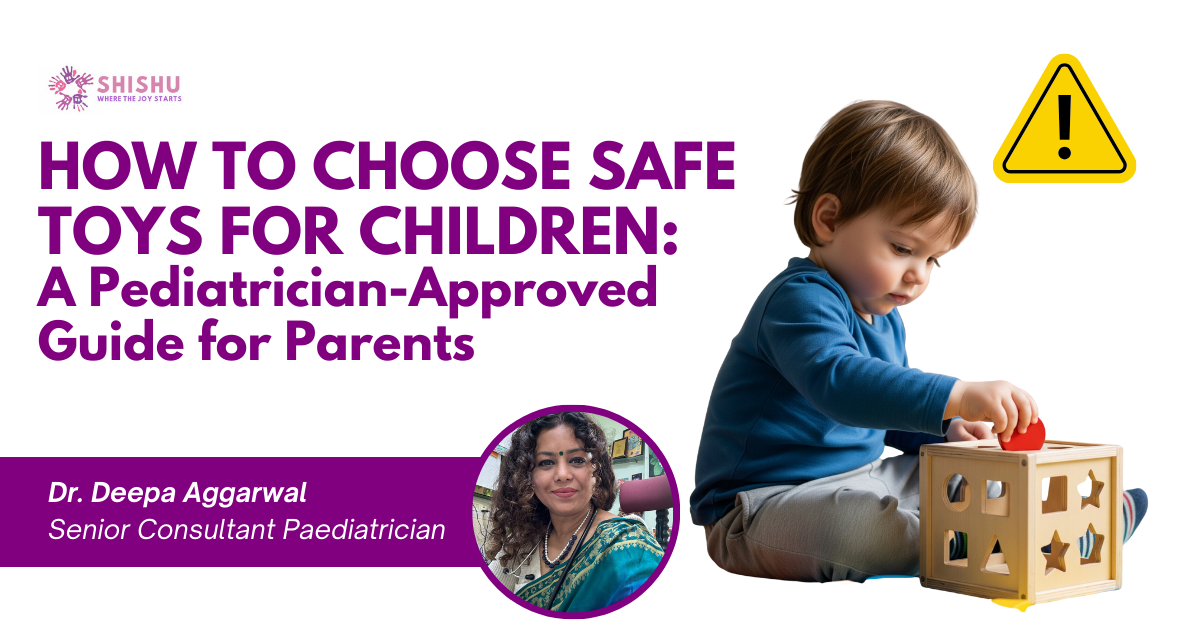
Toy Safety for Children: A Parent’s Guide
Toys are an essential part of childhood. They support learning, creativity, emotional development, and motor skills. However, not all toys are safe for children especially for infants and toddlers who explore the world by putting objects in their mouths.
According to pediatric safety experts, toy-related injuries such as choking, cuts, burns, and finger injuries are common but largely preventable. Choosing the right toys, based on age, size, material, and design, can significantly reduce these risks.
This pediatrician-approved guide explains how parents can choose safe toys for children, backed by recommendations from globally trusted child health organizations like the American Academy of Pediatrics, World Health Organization, and the Centers for Disease Control and Prevention.
1. Always Choose Age-Appropriate Toys
One of the most important safety rules is selecting toys suitable for your child’s age.
Toys designed for older children may contain small parts, sharp edges, or complex mechanisms that can be dangerous for younger children. Age labels on toys are not about intelligence — they are about safety and developmental readiness.
SEO keywords used: age-appropriate toys, safe toys for babies, toys for toddlers
2. Avoid Toys with Choking Hazards
Choking is one of the leading causes of toy-related injuries in young children.
Parents should avoid toys that have:
-
Small detachable parts
-
Sharp edges
-
Items like marbles, balls, or toy coins
These objects can easily block a child’s airway, especially in children under three years of age.
3. Toy Size Matters More Than You Think
Safe toys should be large enough so they cannot be swallowed or become lodged in the windpipe.
Pediatric safety standards recommend that toys should be at least:
-
3 cm in diameter
-
6 cm in length
If a toy fits completely inside a child’s mouth, it is not safe.
SEO keywords used: choking prevention in children, toy size safety
4. Check for Non-Toxic Materials
Children frequently chew on toys, making material safety extremely important.
Before purchasing, ensure that:
-
Paint on toys is lead-free
-
Crayons and paints are clearly labeled non-toxic
-
Art and craft materials explicitly state “non-toxic” on the packaging
Exposure to toxic chemicals can affect a child’s developing brain and overall health.
5. Fabric and Stuffed Toys Must Be Safe
Soft toys may look harmless, but they also need safety checks.
Parents should choose stuffed and fabric toys that are:
-
Washable, to reduce germs and allergens
-
Flame resistant, to lower fire risk
Cleanability is especially important for babies who frequently drool or mouth toys.
6. Battery-Operated Toys Need Extra Caution
Battery-operated toys can pose serious risks if batteries are accessible.
Always ensure that:
-
Battery compartments are secured with screws
-
Children cannot pry them open
-
The toy is sturdy and unbreakable
Swallowing batteries, especially button batteries, is a medical emergency.
SEO keywords used: battery toy safety, child injury prevention
7. Durability and Chew Resistance
Children often bite, throw, or pull toys during play.
Safe toys should be:
-
Strong and durable
-
Unbreakable
-
Able to withstand chewing without breaking into pieces
Broken toys can quickly become choking or injury hazards.
8. Beware of Strings, Cords, and Pinch Points
Toys should not have:
-
Strings longer than 7 inches (18 cm)
-
Small gaps or parts that can pinch tiny fingers
Long strings can cause strangulation risks, while pinch points can lead to finger injuries.
9. Why Baby Walkers Are Not Recommended
Many parents believe baby walkers help children learn to walk faster. However, pediatric experts strongly advise against their use.
Baby walkers have been linked to:
-
Head injuries
-
Falls down stairs
-
Severe accidents at home
They do not improve walking development and can cause serious harm.
Final Thoughts from a Pediatrician
Most toy-related injuries are preventable with informed choices. When buying toys, parents should focus on age suitability, size, material safety, durability, and proper design.
When in doubt, choose simpler toys and always supervise young children during play. A safe toy today can prevent an emergency tomorrow.