
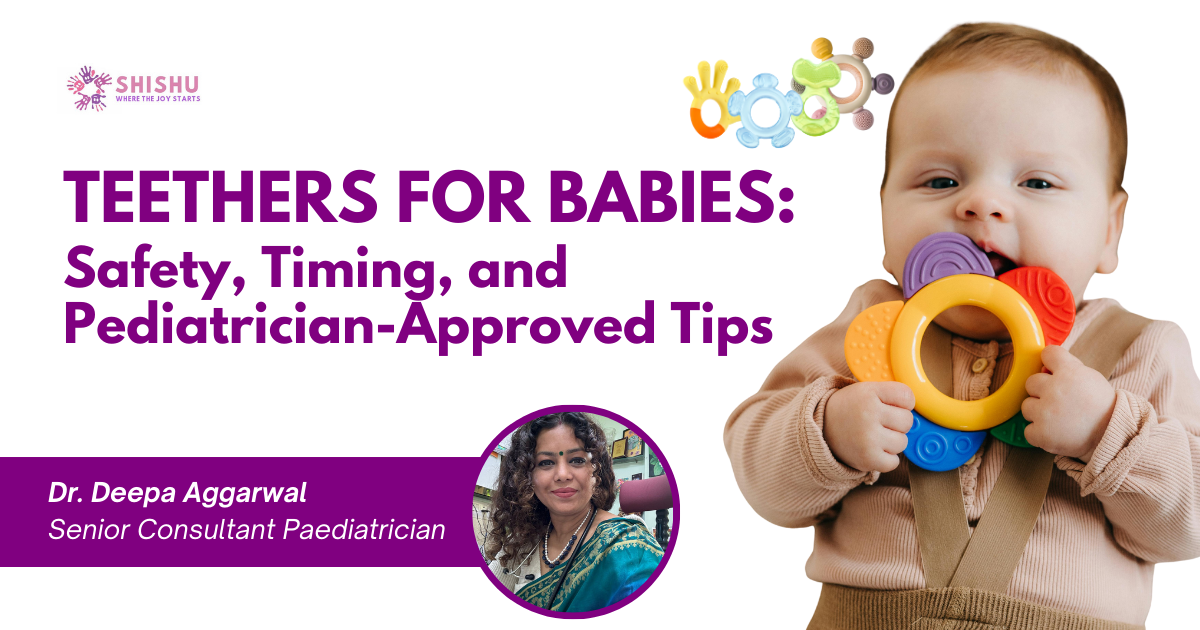
Teethers: When to Use?, When to Avoid?, and How to Choose Safely?
Teething is an important developmental milestone in a baby’s first two years of life. As teeth begin to emerge, many babies experience gum discomfort, increased drooling, irritability, and a strong urge to chew. This is often when parents consider using a teether.
While teethers can be helpful, not all teethers are safe, and not every baby is ready for one at the same age. As a pediatrician, I often see concerns related to choking risks, unsafe materials, and incorrect usage.
This guide will help parents understand when teethers are safe, when to avoid them, and how to choose the right teether for your baby.
When Can Babies Start Using a Teether?
Most babies are ready to use a teether when they begin mouthing and chewing on their hands, fingers, or toys, which usually happens around 4 to 6 months of age.
At this stage:
-
Babies have better head control
-
Oral exploration increases
-
Gums may feel sore as teeth start moving under the surface
A teether can be introduced only if it is age-appropriate, non-toxic, and always used under supervision.
When Should Parents Use a Teether?
Teethers can be helpful when used correctly and at the right time.
Appropriate times to use a teether include:
-
When your baby is around 6 months old and shows signs of teething such as drooling, chewing, or irritability
-
During awake and supervised time only
-
To help soothe sore gums naturally
-
To support hand-to-mouth coordination, oral exploration, and early pre-feeding skills
Teethers can be used throughout the main teething period (approximately 4 to 24 months), as long as the baby enjoys them and can hold them safely.
When Should Teethers Be Avoided?
Despite being common baby products, teethers are not suitable for all babies or situations.
Avoid using teethers if:
-
Your baby is younger than 3–4 months and has poor head control
-
There is weak suck–swallow–breathe coordination
-
The teether is large, heavy, or difficult to hold
Early or inappropriate use may increase the risk of choking or discomfort.
Teether Safety: What Parents Must Never Ignore
Many teether-related injuries happen because of unsafe design or materials.
Avoid teethers that:
-
Are small enough to fit fully inside the baby’s mouth
-
Have detachable parts, beads, or strings
-
Can crack, break, or peel with chewing
-
Are worn as jewellery (necklaces, bracelets, anklets), which pose serious choking and strangulation risks
-
Contain liquid or gel fillings that may leak or puncture
Paediatricians strongly warn against teething jewellery, even if marketed as “natural” or “amber.”
Choose Only Non-Toxic, Baby-Safe Materials
Always check the material before buying a teether.
Safe teethers should be:
-
BPA-free
-
Free from phthalates, PVC, lead, and harmful paints
-
Made specifically for babies
-
Certified according to current safety standards
Avoid very old or second-hand teethers, as they may not meet updated safety guidelines.
Supervision Is the Most Important Rule
A teether should never be used unsupervised.
Always ensure:
-
The baby is awake and alert
-
The teether is clean and intact
-
The baby is not sleeping, crawling, or distracted while using it
Teethers are meant to support comfort, not replace parental supervision.
Final Takeaway for Parents
Teethers can be a useful tool during teething but only when chosen wisely and used safely.
Not every teething product sold online or recommended by others is appropriate for your baby. When in doubt, consult your pediatrician before introducing new baby products.
Safe teething is about the right age, the right product, and constant supervision.