
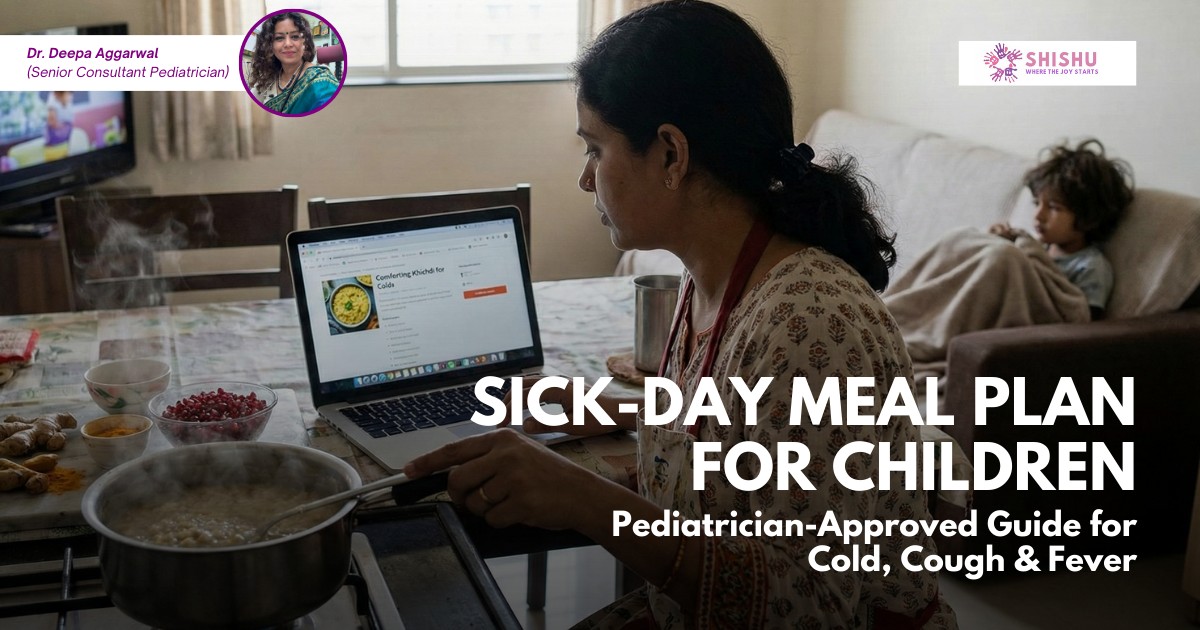
Pediatrician-Approved Guide for Cold, Cough & Fever
By Dr. Deepa Aggarwal
Senior Consultant Paediatrician
When a child falls sick with cold, cough or fever, one of the biggest concerns parents have is “What should I feed?” Appetite often drops, routines get disrupted, and well-meaning advice from multiple sources can feel overwhelming.
This practical sick-day guide simplifies feeding decisions and focuses on what truly matters during illness- hydration, comfort, and recovery, not forcing food.
Why Sick-Day Nutrition Matters !?
During illness:
• Body temperature rises → fluid loss increases
• Appetite naturally reduces → calorie intake drops
• Breathing effort, cough, or vomiting may interfere with eating
• The immune system needs adequate fuel + rest
Children recover faster when we support them with easy-to-digest foods, proper hydration, and pressure-free meals.
✅ SICK-DAY CHECKLIST FOR PARENTS
(Save • Print • Keep handy)
1️⃣ Fluids Come First (Most Important)
✔ Offer fluids every 15–30 minutes in small sips
✔ Breastfeeding or formula must continue for infants
✔ Older children can have:
– Water
– Clear vegetable or chicken soup
– Coconut water
– ORS (especially if vomiting or loose stools)
❌ Avoid sugary drinks, packaged juices, aerated beverages
Rule: Hydration matters more than solids on sick days.
2️⃣ Feed Small, Frequent & Familiar Meals
✔ Offer food only when child shows interest
✔ Give small portions, repeat if accepted
✔ Stick to known, comfort foods illness is not the time to introduce new foods
✔ Warm foods are usually better tolerated than cold foods.
3️⃣ Continue Milk Don’t Stop It
✔ Breast milk provides hydration, calories & immune protection
✔ Formula feeding should continue at regular strength
✔ Cow’s milk can be given if the child tolerates it (no force)
❌ Do not dilute formula or withhold milk unless advised medically
4️⃣ Adjust Texture Based on Symptoms
• Sore throat / cough: soups, mashed foods, porridge
• Vomiting: liquids first → progress slowly to semisolids
• Nasal congestion: warm fluids help soothe and hydrate
• Diarrhoea: ORS + light foods (rice, banana, curd if tolerated)
5️⃣ Foods To Avoid During Illness
❌ Fried, oily, spicy foods
❌ Whole nuts, raw carrots, popcorn (choking risk)
❌ Excess sugar or artificial drinks
❌ Honey for children below 1 year
❌ Force-feeding or scolding
🥣 SAMPLE SICK-DAY MEAL PLAN (Flexible Guide)
⚠ This is not a strict schedule adapt to your child’s appetite.
For Babies (6 months+ on solids)
Morning:
• Breastfeed / Formula
• Mashed banana or stewed apple
Mid-morning:
• Few spoonfuls of clear vegetable soup
Lunch:
• Soft rice + dal (thin consistency) or khichdi
Evening:
• Breastfeed / Formula
• Applesauce or smooth vegetable puree
Dinner:
• Light soup or mashed vegetables
For Toddlers & Older Children
Morning:
• Warm milk or plain curd (if tolerated)
• Soft fruit (banana / stewed apple)
Mid-morning:
• Coconut water / water sips
Lunch:
• Rice + dal + soft vegetables / khichdi.
• Can try finger food like potato wedges, toasted bread strips with peanut butter or home made crisps.
• Add a little ghee for warmth & energy
Evening:
• Plain toast fingers / applesauce / yogurt
Dinner:
• Vegetable soup / dal soup + soft roti or rice
💡 Helpful Comfort Foods (Use Sensibly)
✔ Clear soups
✔ Khichdi / congee
✔ Mashed potato or sweet potato
✔ Warm lemon water (older children)
✔ Popsicles (for hydration & sore throat relief)
🚨 When to See Your Pediatrician Immediately
Seek medical care if your child has:
• Poor fluid intake or no urine for 6–8 hours
• High or persistent fever (>48 hours)
• Difficulty breathing / fast breathing
• Excessive drowsiness or irritability
• Repeated vomiting or blood in stools
• Poor weight gain or lethargy in infants
Final Takeaway for Parents
A sick day is not about finishing meals.
It’s about:
✅ Hydration
✅ Comfort
✅ Gentle nutrition
✅ Observation
Children often eat less during illness and that’s normal. Your calm support, patience, and timely care help recovery more than force-feeding.
When in doubt, always consult your pediatrician.